Ethiopia Yellow Fever Vaccine Requirements for Travelers
If you are planning a trip to Ethiopia, understanding the yellow fever vaccine requirements is essential. Ethiopia enforces strict health regulations at its borders to prevent the spread of yellow fever, and failure to comply may result in denied entry or quarantine.
This guide explains who needs the yellow fever vaccine, exemptions, transit rules, and what documents you must present on arrival, helping you travel to Ethiopia smoothly and confidently.
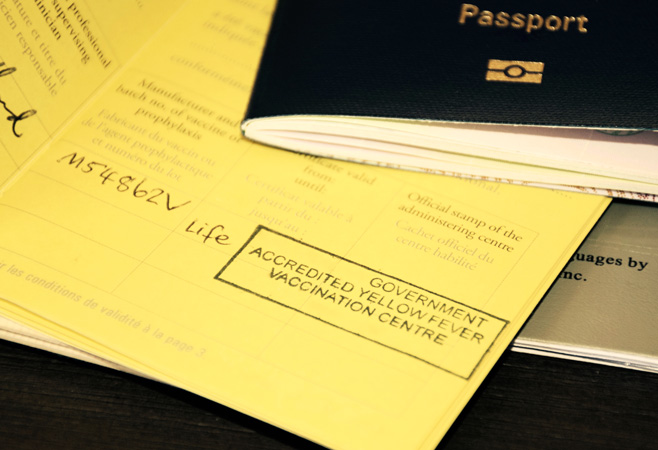 Ethiopia’s yellow fever vaccine requirements depend on your travel history and country of departure.
Do You Need a Yellow Fever Vaccine to Enter Ethiopia?
Yes — Ethiopia requires a yellow fever vaccination certificate for travelers arriving from countries with risk of yellow fever transmission. In some countries, yellow fever risk exists only in specific regions rather than nationwide, under specific conditions:
Travelers from Risk Countries: If you're arriving from a country with a risk of yellow fever transmission (as listed by WHO), you must show proof of vaccination. This includes anyone who has transited through an airport in such a country for more than 12 hours.
Age Requirements: The rule applies to individuals aged 9 months and older. Infants under 9 months are generally exempt, but consult a healthcare provider for personalized advice.
Recommendations for All Travelers: Even if not required for entry, the CDC and WHO recommend yellow fever vaccination for most travelers aged 9 months and older visiting Ethiopia, except those whose travel is limited to areas above 2,300 meters in elevation, including Addis Ababa.
If your itinerary includes rural areas or regions south of the Sahara, vaccination is especially advised due to higher mosquito activity.
These travelers must present a valid Yellow Fever International Certificate of Vaccination (ICV) upon arrival. And the vaccine must be administered at least 10 days before entry into Ethiopia.
Is Yellow Fever Vaccination Required for Transit Passengers?
Yes, in some cases. You may be asked to present a yellow fever certificate if:
- Your transit stop is in a yellow fever–endemic country
- You leave the airport transit zone
- Your layover exceeds 12 hours, depending on the country
If you are transiting through non-risk countries only, vaccination is generally not required.
Exemptions from Yellow Fever Vaccine Requirement
You may be exempt if:
- You are under 9 months old
- You have a medical contraindication (must present an official medical waiver)
- You are traveling only from non-risk countries with no transit in endemic areas
Immigration officers have the final authority to assess exemptions.
 The Ethiopia yellow fever vaccine requirements apply to travelers arriving from countries with a yellow fever risk.
What Is Yellow Fever and Why Does Ethiopia Require Vaccination?
Yellow fever is a mosquito-borne illness prevalent in parts of Africa and South America. Symptoms can range from mild fever to severe organ failure, with no specific treatment available—prevention through vaccination is key.
Ethiopia, located in East Africa, is considered a country with a risk of yellow fever transmission in certain areas. As a result, the Ethiopian government mandates proof of vaccination for travelers arriving from high-risk countries to protect public health.
The World Health Organization (WHO) and Centers for Disease Control and Prevention (CDC) recommend the vaccine for most visitors to Ethiopia, emphasizing its role in travel safety. Always check the latest updates, as requirements can evolve based on global outbreaks.
Yellow Fever Vaccine Validity for Ethiopia
The yellow fever vaccine provides lifetime protection
The certificate becomes valid 10 days after vaccination
Ethiopia accepts lifetime validity in line with WHO guidelines
There is no need for booster doses if you already have a valid certificate.
Proof of Vaccination: What Documents Do You Need?
To enter Ethiopia, you'll need an International Certificate of Vaccination or Prophylaxis (ICVP), commonly known as the "Yellow Card." This must be issued by an authorized vaccination center and show that the vaccine was administered at least 10 days before your arrival.
Validity: The yellow fever vaccine provides lifelong protection after a single dose, as per WHO guidelines updated in 2016. No booster is needed for most people.
Exemptions: If you have a medical contraindication (e.g., allergies or immune system issues), obtain a waiver letter from a doctor. However, this doesn't guarantee entry—Ethiopian authorities may quarantine or deny access.
Transit Rules: Short layovers (under 12 hours) in risk countries typically don't require proof, but verify with your airline.
Present your Yellow Card at immigration upon arrival. Failure to comply could result in quarantine, vaccination on-site (if available), or refusal of entry.
 Ethiopia yellow fever vaccine requirements are part of the country’s public health protection measures.
Is Yellow Fever a Risk Within Ethiopia?
Yes, certain areas of Ethiopia are considered yellow fever endemic zones, particularly regions below 2,300 meters (7,546 feet) in elevation. The Ethiopian highlands, including Addis Ababa, are generally not at risk due to the high altitude.
Areas with Yellow Fever Risk in Ethiopia:
Gambella Region
Benishangul-Gumuz Region
Lower elevations of South Nations, Nationalities, and Peoples' Region (SNNPR)
Parts of the Oromia Region below 2,300m
Somali Region
Recommendation: Even if not required for entry, vaccination is strongly recommended if you plan to visit these lower-elevation regions during your stay.
Understanding the Yellow Fever Certificate
Countries Required to Show Yellow Fever Vaccination for Ethiopia
You are required to show proof of vaccination if you are traveling from or have recently been in:
Africa: Angola, Benin, Burkina Faso, Burundi, Cameroon, Central African Republic, Chad, Congo, Côte d'Ivoire, Democratic Republic of Congo, Equatorial Guinea, Gabon, Gambia, Ghana, Guinea, Guinea-Bissau, Kenya, Liberia, Mali, Mauritania, Niger, Nigeria, Rwanda, Senegal, Sierra Leone, South Sudan, Sudan, Togo, Uganda
South America: Argentina, Bolivia, Brazil, Colombia, Ecuador, French Guiana, Guyana, Panama, Paraguay, Peru, Suriname, Trinidad and Tobago, Venezuela
Important: Airport transit in yellow fever–risk countries exceeding 12 hours or involving exit from the transit area may trigger the vaccination requirement.
What Happens If You Don’t Have a Yellow Fever Certificate?
If you arrive in Ethiopia without a required yellow fever vaccination certificate, you may face:
- Denied entry
- You may face refusal of entry, quarantine, or in limited cases, on-site vaccination if facilities are available
- Quarantine or isolation
- Fines or travel delays
To avoid complications, travelers are strongly advised to comply before departure.
Where Can You Get the Yellow Fever Vaccine?
You must receive the vaccine from an authorized vaccination center that can issue an official International Certificate of Vaccination (Yellow Card).
Many travel clinics, hospitals, and public health centers offer this service.
Does Yellow Fever Vaccination Replace Other Entry Requirements?
No. The yellow fever vaccine is a health requirement, separate from immigration requirements, such as:
- Ethiopia visa or eVisa
- Valid passport
- Return or onward ticket
- Proof of accommodation
- Travelers must meet all entry conditions to be admitted.
 Understanding Ethiopia’s yellow fever vaccine requirements helps travelers avoid entry delays at the airport.
Frequently Asked Questions (FAQ)
Is yellow fever vaccination mandatory for all travelers to Ethiopia?
No. It is mandatory only for travelers coming from or transiting through yellow fever–risk countries.
Do children need a yellow fever vaccine for Ethiopia?
Yes, children aged 9 months and older are subject to the same requirement.
Do I need the vaccine if I’m coming from Europe or Asia?
Generally, no, unless you transited through a yellow fever–endemic country.
Can I get vaccinated on arrival in Ethiopia?
In some cases, yes — but this may cause delays, extra costs, or quarantine, and is not guaranteed.
Do I need the yellow fever vaccine if I'm only transiting through Addis Ababa?
If you're transiting through Ethiopia without leaving the airport, you typically don't need the vaccine unless you're arriving from a yellow fever endemic country.
Is the yellow fever vaccine checked at Addis Ababa Bole International Airport?
Yes. Health officials may request your certificate before immigration clearance.
What if my yellow fever certificate is lost or stolen during travel?
Carry a photocopy or digital photo of your certificate separately. Some countries may accept these with a proper explanation, but you may face difficulties. Contact your vaccination center about obtaining a replacement.
Is the yellow fever vaccine still required for 2026?
As of January 2026, Ethiopia's yellow fever vaccine requirements remain consistent with WHO guidelines, but monitor for changes due to outbreaks.
Final Travel Advice
The yellow fever vaccine requirement is generally enforced, particularly for travelers arriving from high-risk countries and plays a crucial role in public health protection. To ensure a smooth arrival, travelers should verify their itinerary, transit points, and vaccination status well in advance.
Preparing the correct documents not only protects your health but also ensures hassle-free entry into Ethiopia.
If you need help with Ethiopia visa requirements, transit rules, or entry regulations, consult a trusted immigration or travel specialist before departure.
Related Articles
- Arba Minch Conference Resort Opens in Ethiopia with 1,300+ Capacity Venue
- Ethiopian Culture and Traditions: History, Food, Music & Customs
- Ethiopia Entry & Quarantine Requirements: What Travelers Should Know
- Eid al-Adha in Ethiopia: Holiday Dates, Celebrations & Travel Tips
- Ethiopia Location on Map: Continent, Borders, Capital & Map Guide
- Nigeria to Ethiopia Travel Guide: Flights, Visa, Routes & Essential Tips
- Bringing Pets to Ethiopia: Requirements & Travel Guide
- Sunrise and Sunset in Addis Ababa: Times & Best Viewing Spots
- How to Travel from Egypt to Ethiopia: Routes and Costs


